
When customers walk through your doors, the first thing they notice isn’t always your signage or décor — it’s what’s right under their feet. A well-designed logo mat can make a lasting impression, communicating your brand’s personality before a single word is spoken. But not all mats are created equal. The art of effective logo mat design lies in combining branding, colour, and function in a way that enhances both aesthetics and practicality.
In this guide, we’ll explore what makes a logo mat stand out, how to design one that aligns with your brand identity, and which design principles guarantee visibility and impact.
🎯 Why Logo Mat Design Matters
A logo mat is more than just a piece of rubber or pvc for removing dirt and grime under your feet — it’s a branding tool. Placed at the entrance, reception, or showroom, it becomes a silent brand ambassador. Businesses use logo mats to:
- Reinforce brand identity through consistent visuals.
- Enhance professional appeal of entryways.
- Promote cleanliness and safety while maintaining style.
- Support marketing campaigns or seasonal messages.
In a world where first impressions matter, investing in professional logo mat design can turn ordinary foot traffic into brand engagement.
🧩 Step 1: Start with Consistency
Consistency is the foundation of any great logo mat. Your design should match your brand guidelines — including logo proportions, colours, and typography. A mat that doesn’t align with your visual identity can create confusion and dilute your branding message.
Tips for consistency:
- Use high-resolution or vector logo files.
- Stick to your brand’s official colours and fonts.
- Align the mat’s look with your overall corporate style.
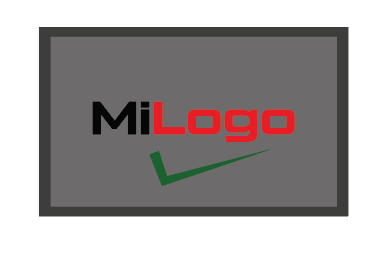

When customers step inside, the mat should feel like an extension of your website, signage, and décor.
🎨 Step 2: Keep It Simple and Clutter-Free
The most effective logo mats follow the “less is more” principle. Trying to squeeze too much text or imagery into a small space can overwhelm the design and make it unreadable from a distance.
Clutter-free design guidelines:
- One logo, one message.
- Avoid busy patterns or gradients.
- Leave negative space to highlight your logo.
People only glance at a mat for a few seconds — simplicity ensures your message is seen and remembered.
🌈 Step 3: Use Contrasting Colours for Visibility
Contrast is key to visibility. A logo that blends into the mat’s background will go unnoticed.
Colour tips:
- Light logo on a dark mat, or vice versa.
- Consider the floor colour beneath.
- Avoid dark-on-dark combinations like navy on black.
- Limit the palette to two or three strong tones.
Contrast improves legibility and makes your brand pop.
📐 Step 4: Choose the Right Orientation
Mat orientation affects how people view your logo.
Orientation guidelines:
- Portrait mats suit narrow entrances or corridors.
- Landscape mats work best in wide lobbies.
- Match the logo’s natural shape to the mat’s layout.
- Always face your logo toward incoming visitors.
Proper orientation ensures the mat communicates clearly from every angle.
🧵 Step 5: Prioritise Print Quality and Material
Even a great design fails on poor materials.
For professional results:
- Choose nylon or polyester for sharp, vibrant indoor prints.
- Use rubber-backed mats for grip and durability.
- Select coir or PVC loop mats for outdoor exposure.
- Approve a digital proof before mass production.
High-quality materials protect your investment and keep your logo fresh.
🧼 Step 6: Maintenance Keeps the Design Alive
A dirty mat quickly undermines your brand image. Regular maintenance ensures your logo mat continues to impress.
Care tips:
- Vacuum daily for indoor mats.
- Hose down outdoor mats weekly.
- Avoid strong chemicals that fade prints.
- Replace worn mats every 12–18 months.
Clean mats show attention to detail — a key trait customers associate with trusted brands.
🚪 Final Thoughts
A thoughtfully designed logo mat does more than decorate an entryway — it becomes part of your brand experience. By following simple principles of logo mat design— consistency, clarity, contrast, and quality — you create a welcome that is both professional and memorable.
Your entrance sets the tone for everything that follows. Make sure it speaks your brand’s language from the ground up.