
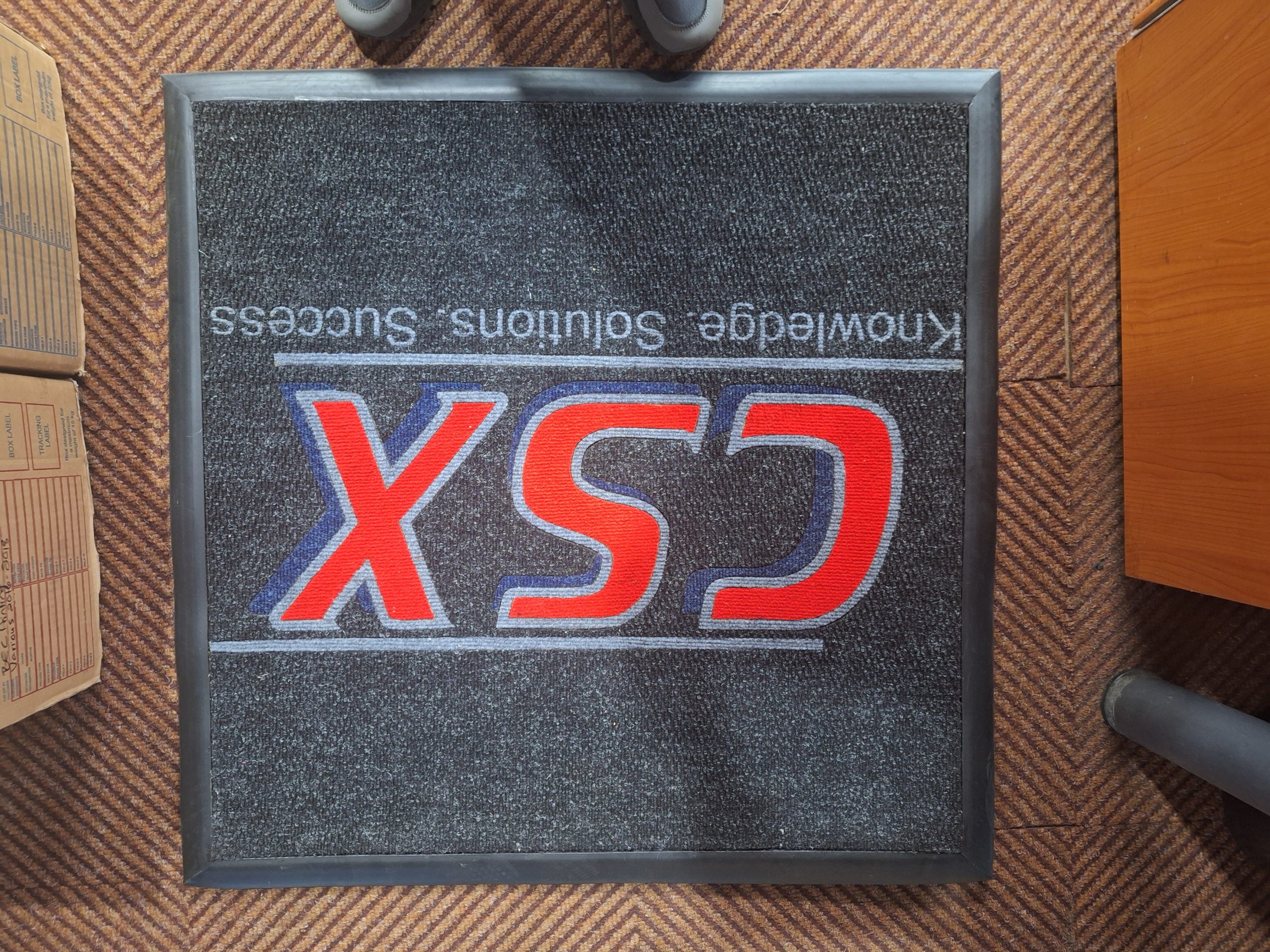
The Detailed Process of Manufacturing Berber Point Branded Mats in South Africa
The creation of a Berber point branded mat in South Africa is a meticulous process that combines client consultation, precision technology, and expert craftsmanship. Unlike simple printed mats, these products are built for durability and longevity, with the logo being an integral part of the mat itself. Here is a step-by-step breakdown of the process.
1. Initial Consultation and Color Compromise
The first step is a detailed discussion with the client. Our team works closely with you to understand your branding and design requirements. A critical part of this stage is managing expectations regarding color.
- Limited Color Palette: The key challenge with Berber point mats is the availability of colors. The process relies on pre-dyed polypropylene fibers, meaning we are limited to the specific colors available on the market for both the base carpet and the logo inserts.
- The Compromise: In most cases, a perfect match to your exact brand colors is not possible. We will present you with the closest available color swatches and work together to find the best possible compromise that still effectively represents your brand. This ensures the final product is both high-quality and an accurate representation of your logo within the manufacturing constraints.
2. Branded Mat Mockup and Laser Cutting Considerations
Once the colors are agreed upon, we move to the digital mockup phase. This is where your brand’s logo is transformed into a design suitable for a Berber point mat.
- Design Simplification: The intricacy of the logo is directly affected by the mat’s size. Large, complex logos with fine details will need to be simplified into solid blocks of color to be effectively cut and inlaid. This is a crucial step to ensure the final product is a clean, recognizable representation of your brand.
- Laser Machine Bed Size: The size of the logo area is dictated by the dimensions of the laser cutting machine bed. This technological limitation means that the logo’s proportions and overall size must be tailored to fit within the machine’s capabilities. Our designers factor this in during the mockup process, guaranteeing a design that is not only visually appealing but also physically manufacturable.
3. Precision Cutting, Assembly, and Gluing
Upon your final approval of the mockup, the manufacturing process begins. This is where the magic happens.
- Cutting: Each piece of the logo and the base mat is cut with absolute precision. This is done using an automated laser cutter, which follows the digital design with perfect accuracy, creating the individual “puzzle pieces” that will form the final mat.
- Assembly: The cut pieces are then meticulously assembled by hand. Each colored piece is carefully fitted into its corresponding cutout in the base mat, ensuring a seamless and tight fit.
- Adhesive Application: In South Africa, the most common adhesive used for this process is contact adhesive glue. It is applied to both the underside of the assembled carpet and the surface of the 3mm insertion rubber that will serve as the mat’s backing. This dual-surface application ensures a robust, permanent bond.
4. Bonding the Carpet to the Rubber Backing
Once the contact adhesive has been applied to both surfaces, the carpet top and the rubber backing are carefully aligned and pressed together. This is a critical step to ensure a secure, long-lasting bond.
- Pressing and Hammering: To guarantee the carpet is firmly bonded to the rubber, a specialized press is often used to apply even pressure across the entire mat. If a press is not available, skilled workers use a hammer, systematically and gently tapping the entire surface of the mat. This process removes any air pockets and ensures the adhesive creates a complete and unbreakable bond between the two layers.
5. Bevelled Rubber Edging and Final Touches
The final step in the process is to add a professional, safety-conscious finish.
- Bevelled Edging: A bevelled rubber edging is applied to the perimeter of the mat. This not only gives the mat a clean, finished look but also acts as a ramp, reducing the risk of people tripping over the mat’s edge. This crucial safety feature is a standard part of the manufacturing process for all high-quality Berber point mats.
With these steps complete, the mat is ready for final inspection, packaging, and delivery, providing a durable, high-quality branded solution for your business.